
Great Stories. Eternal Truths.
Part 4, Noah & the Flood
Watch Sermon
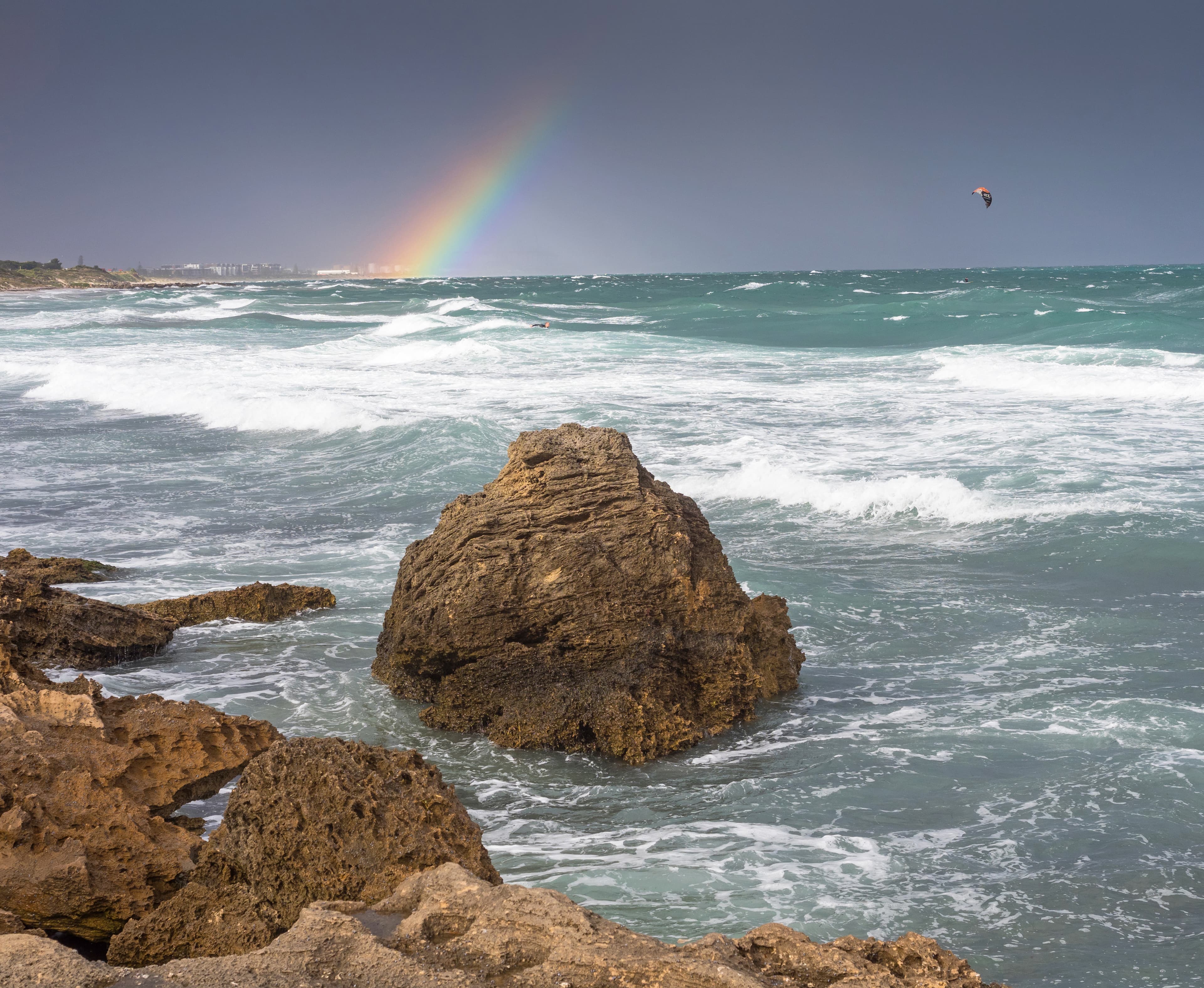
Before we rush to the rainbow, we must remember the rain.
Scripture Reference
Genesis 6:9-22
Full Transcript
We’re going to be reading starting in verse 9 this morning in chapter 6. When you get there, if you’re able, would you stand with me as we honor God and the reading of his word. Genesis chapter 6, beginning in verse 9.
Now hear the word of the Lord.
This is the genealogy of Noah. Noah was a just man, perfect in his generations. Noah walked with God.
And Noah begot three sons: Shem, Ham, and Japheth.
The earth also was corrupt before God, and the earth was filled with violence.
So God looked upon the earth, and indeed it was corrupt; for all flesh had corrupted their way on the earth.
And God said to Noah, "The end of all flesh has come before Me, for the earth is filled with violence through them; and behold, I will destroy them with the earth.
"Make yourself an ark of gopherwood; make rooms in the ark, and cover it inside and outside with pitch.
"And this is how you shall make it: The length of the ark [shall be] three hundred cubits, its width fifty cubits, and its height thirty cubits.
"You shall make a window for the ark, and you shall finish it to a cubit from above; and set the door of the ark in its side. You shall make it [with] lower, second, and third [decks].
"And behold, I Myself am bringing floodwaters on the earth, to destroy from under heaven all flesh in which [is] the breath of life; everything that [is] on the earth shall die.
"But I will establish My covenant with you; and you shall go into the ark--you, your sons, your wife, and your sons' wives with you.
"And of every living thing of all flesh you shall bring two of every [sort] into the ark, to keep [them] alive with you; they shall be male and female.
"Of the birds after their kind, of animals after their kind, and of every creeping thing of the earth after its kind, two of every [kind] will come to you to keep [them] alive.
"And you shall take for yourself of all food that is eaten, and you shall gather [it] to yourself; and it shall be food for you and for them."
Thus Noah did; according to all that God commanded him, so he did.
May God in his blessing to the reading, the preaching, and now your hearing to understand his holy word. May our Lord and Savior Jesus Christ forever be praised. And all of God’s people say, “Amen.”
Amen. You may be seated.
Most of us learn the story of Noah, the Noah and the flood, in Sunday school or in vacation Bible school. We learned it well. We learned it the same way that we learned a lot of our nursery rhymes in kindergarten: bright colors, smiling little animals, a cheerful boat bobbling on the gentle waves, the neat little catchy song. If you don’t know, the Lord told Noah to build him an ark. I think we did that for children’s choir one time.
But just like many of our nursery rhymes actually have maybe a darker side in truth, this story of Noah does as well. You may not know what I’m talking about. Think about Ring Around the Rosie. How many of you know Ring Around the Rosie? Ring around the rosie, pocket full of posy. Upstairs, downstairs, we all fall. Ashes, ashes, we all fall down.
But did you know that that poem comes from the Black Death in Europe in the 14th century? The “ring around the rosie” is the rash that was on their skin. “Pocket full of posies” was because they thought carrying posies in their pockets warded off the evil spirits that caused the disease. “Ashes, ashes”—that’s the burning of bodies because there were too many to bury. And then we say, “And we all fall down.”
It’s a bit of a sobering story, isn’t it? What we thought was just a playful little rhyme is actually a deep lament sung in the shadow of mass death. The same way the story of Noah and the flood is turned into a children’s tale—even VeggieTales. How many of you have seen VeggieTales? Turned into a children’s tale with the rainbows and the giraffes and the big boat.
But Scripture paints a far more serious picture. The story of Noah and the flood is not just a bedtime story about cute animals. This is a true account of God’s judgment on a world gone mad—a world like the world we live in today, a world gone mad with sin. And at the same time, it is a story of God’s gracious mercy to provide a way of escape.
So before we rush to the rainbow, we must remember the rain. And before we smile at the animals marching in two by two, we must reckon with the cries of those who were left out. The story of Noah isn’t meant just to be a quaint little mural painted on the children’s department wall. It’s meant to be an accurate mirror that we hold up to ourselves and our world—our own world. It is also meant to be a message of hope for anyone who is willing to step inside the ark of salvation that God provides.
And so, as it is in all of these messages in this Great Stories, Eternal Truths series, we begin with number one: a retelling of the story. Sit back, get comfortable, and listen.
It was an age of industry and invention, but it was not an age of righteousness. The cities rang with laughter, but it was a laughter of scorn. Men labored hard to build their houses and gather their riches, but they paid no attention to the God who had given them the very breath of life. Wickedness grew not only in the secret corners, but it paraded boldly in the open streets. Cruelty and corruption, violence and vanity—they were everywhere. It was as if the whole earth had agreed upon the same conspiracy to forget its God.
And in the midst of a society so clever in its devices, so careless in its conscience, there lived a man named Noah. He was not extraordinary in the way he dressed. He didn’t walk around with trumpets and fanfare. But in the sight of heaven and in the sight of God, Noah was seen as righteous.
And this, folks, you’ve got to get this: Noah’s virtuous life was not an easy thing in a generation that laughed at righteousness as though it were a silly joke. One evening, when the sun had set after another day of merriment and murder, the Lord spoke to Noah and said, “The end of all flesh is come before me. The earth is filled with violence through them. Make thee an ark of gopherwood.”
Now imagine Noah. Noah sets to work planing timbers, driving pegs, while his neighbors walked up and leaned on the fence posts of Noah’s front gate to watch, to mock, and to jeer. “What foolishness is this, old man? A ship on dry land? Will the heavens rain down rivers? Will the sea, the ocean, climb uphill?”
Their taunts rang out in the air, but Noah’s hammer rang louder because Noah built not to please men, but to please God. And day after day, the ark took form—a hulking silhouette, a shadow against the horizon, just like a sermon. A sermon made of wood was preaching judgment with every beam and board. Yet still the people laughed. Still they ate and drank, married and made merry, their ears stuffed tight with the cotton of unbelief.
Then, in a moment as solemn as the tolling of a great bell, animals began coming two by two. They shuffled. They trotted. They crawled. And they flew into the ark—the lion tossing his proud mane, the lamb with gentle steps, the sparrow and the eagle flying in side by side. And behind them, Noah and his family—eight souls in all—entered the ark. And God shut the door.
And God shut the door.
Then the rain came. Not the gentle mist of a spring morning, but torrents from above and, as the Bible says, fountains from beneath. The scoffers who had joked and jeered and mocked with their mouths now cried out, beating on the door they had once laughed at. But the ark was sealed, and the waters rose higher and higher until the mountains themselves bowed beneath the great flood.
And for forty days and forty nights, the world was undone. Every laughter was silenced. Every mocker was silenced. Every jeer was drowned. And yet within the ark there was safety—dry and secure as a cradle rocked by the very hand of God.
At last the storm ceased, and the dove, that humble herald of peace, returned with an olive leaf. The door was opened, and Noah stepped into a new world—a quiet world, a cleansed world, a world as fresh as the first morning after creation.
And there, on an altar of stone, he offered a sacrifice, a burnt offering, and the smoke rose to heaven as a sweet savor to the Lord. And God, in his mercy that is greater than his judgment—his mercy greater than his judgment—set his bow in the clouds. Not a bow of battle bent toward man, but a rainbow, an arch of promise, an umbrella of hope stretched across the heavens, declaring for all generations that never again will I destroy the earth with a flood.
And so the story ends not in despair, but in hope—hope that is anchored in God’s grace. For as the ark carried Noah through the waters of death to life, so Jesus our Lord carries all who believe in him from judgment into salvation.
We retell the story, and we retell the story many ways. But maybe more importantly, number two, we need to remember the truths—what I was talking to the boys and girls about. Do you know that all truth is God’s truth? I had this discussion this last week with pastors and church planters. We were discussing this concept that all truth is God’s truth. If it is true, regardless of the source of the truth, the truth is God’s truth.
Jesus said, “I am the way, the truth.” He didn’t say, “I tell the truth.” He said, “I am the truth.”
Remembering the truths of God’s word in this story:
Number one: God sees and will judge sin and wickedness. His eyes roam to and fro throughout the earth. God has not stopped his observation of planet Earth. God saw the wickedness of the people in Noah’s time. They had grown more wicked with every generation. They were undoubtedly telling themselves, “Nobody’s going to see. God in heaven does not watch.” Then the next generation said, “There is not even a God in heaven to watch.” But God was watching the whole time. And God still sees wickedness and will judge wickedness. He has not changed.
Truth number two: God has his people in every generation and in every situation. Noah found favor in the eyes of the Lord. He stood even if he had to stand alone. And it has been that way in every generation.
Truth number three: The way of escape that God provides is the only way. God provided an ark, and that was it. God provides an ark today—his name is Jesus.
Truth number four: What God says he will do, he will do. God told Noah what he was going to do, and God did it.
Truth number five: God’s plans don’t have to make sense to us. It is not our job to understand God’s plan. It is our job to follow it.
And one more truth. How did the people get that bad? They went from walking with God in the cool of the day to living like there was no God at all. And the answer is neglect. Soil that is not enriched dies—and so does the church.
Finally, number three: responding with faith.
The time of Noah was not unique. Jesus said, “As it was in the days of Noah, so shall it be at the coming of the Son of Man.” The question is not, “Are we living in the end times?” The question is, “Are we living like Noah—or like the masses?”
Be a Noah. Even if you stand alone. There is work to be done.
Work till Jesus comes.
Most importantly, make sure you’re in the ark. Have you been saved? Are you born again? Do you know today that Jesus is your Savior? If you don’t know, today is the day. Whatever decision you need to make, now is your time.